

Some furniture is chosen slowly; other pieces are bought almost without thinking. Side tables usually fall into the second group, which is a shame, because they are the pieces we use most every day: it is where we leave our coffee cup, the book we have just started, the phone, the lamp that lights up the evening.
Well chosen, a side table solves space problems, completes the coffee table (or replaces it) and brings that touch of wood, stone or natural fibre that makes a living room feel warm. In a Mediterranean-style home it is also the perfect excuse to introduce natural materials and organic shapes without filling the room.
We explain where to place them, which heights and sizes work best, which materials to choose and how to style them without clutter, with ideas you can find in our shop.

In this article
Get the look
In the photo above, the living room of a house in Menorca: a green sofa flanked by two very different side tables, an open wooden cube with a gold lamp and a grey block with vases and olive branches. These pieces will help you recreate it.


1. What a side table is for
The coffee table brings people together; the side table keeps them company. Its job is to be exactly where you need it: next to the sofa, beside the reading chair or at the foot of the bed. That is why it is so useful in small living rooms, where a large coffee table gets in the way, and in large ones, where it helps create little corners within the room.
It is also one of the easiest pieces to move. Today it holds the lamp next to the sofa; tomorrow it becomes an extra surface beside the armchair when guests arrive. If you are also thinking about the main piece, we explain how to choose a coffee table by size, shape and material.
What it can do for you
- Offer support: for your cup, book or remote, without getting up from the sofa.
- Provide light: it is the ideal base for a warm table lamp.
- Replace the coffee table: two or three grouped side tables take up less space and adapt better.
- Decorate: one sculptural piece in wood or stone is enough to give a corner character.

Get the look
A bright living room on the Costa Brava where a simple tree trunk works as a side table next to the sofa, together with a round black table and a natural fibre rug. To bring it home:


2. Where to place it
The most common spot is next to the arm of the sofa, but it is not the only one. Think about your daily gestures: where you put down your coffee, where you read, where you charge your phone. That is where a side table makes sense.
Next to an armchair, it creates a complete reading corner; if you want one, here are ideas for choosing an armchair that invites you to stay. In the bedroom it can work as a bedside table, especially if you want something lighter than a chest of drawers (here is how to choose bedside tables). And in the hallway, a small round table collects keys and post when there is no room for a console.
The five corners where it is most welcome
- Next to the sofa: at arm height, so everything is within reach.
- Beside the armchair: with a lamp, it becomes your reading corner.
- Next to the bed: as a light bedside table in small bedrooms.
- In the hallway: for keys, post and a vase of flowers.
- On the terrace: between two armchairs, for drinks or the afternoon coffee.
3. Heights and sizes that work
The golden rule is simple: the top of the side table should be level with the arm of the sofa or slightly below it. That way you can put down your glass without stretching or knocking it over. If the sofa has no arms, use the seat height plus about 10-15 cm as a guide.
As for size, you do not need much: a diameter of 40-50 cm holds a small lamp, a book and a cup. If the table stands on its own between two armchairs it can be a little larger; if it sits right next to the sofa, it is better if it does not stick out beyond the arm.
Measurements worth remembering
Key idea: Before buying, stack a few books next to the sofa up to the height that feels comfortable and measure them. That is the height of your side table.

Get the look
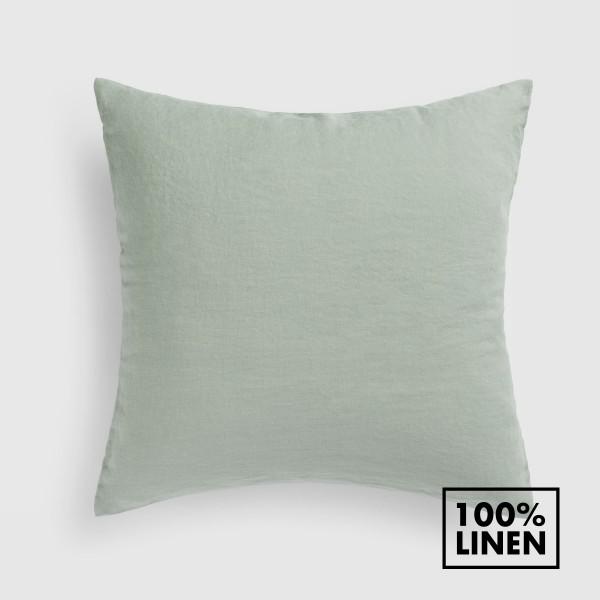
A beige sofa with a green cushion and a small wooden table that slides up to the seat for a magazine or a coffee. These pieces achieve the same effect:


4. Materials: wood, stone, fibres and metal
In a Mediterranean-inspired living room, natural materials lead the way. Solid wood (teak, mango, oak, suar) brings warmth and stands up to daily use; stone (marble, travertine, terrazzo) adds visual weight and freshness; fibres such as rattan or cane lighten things up; and metal, in small doses, adds a touch of light.
The best approach is not to repeat the material of the coffee table: if it is wood, try a stone or fibre side table; if it is marble, a wooden one balances it. That way the whole looks considered rather than straight out of a catalogue.
| Material | What it brings | Best for |
|---|---|---|
| Solid wood | Warmth, durability, natural grain | Living room and bedroom, daily use |
| Marble, travertine or terrazzo | Freshness, visual weight, a sculptural feel | Next to linen or light-coloured sofas |
| Rattan, cane or fibres | Lightness, texture, a summery mood | Reading corners and small living rooms |
| Metal | Fine lines, a hint of shine | Combined with wood or stone |


Get the look
A pale wooden table with cut-out arches by the window: the arch, so present in southern architecture, turned into furniture. For a corner like this:


5. Shapes that solve problems: nesting, C-shaped, tray or stool
Beyond the classic round table, there are formats designed for real homes. Nesting tables tuck under one another and come out when guests arrive. C-shaped tables slide under the sofa and bring the surface closer to your lap, perfect for dinner in front of a film. Tray tables lift off so you can carry the coffee from one place to another.
And do not forget the simplest trick of all: a wooden stool. Next to the bed, beside a chair or in the bathroom, it works as a side table with a plant or a couple of books, and when needed, it becomes a seat again.


Get the look
A chunky wooden stool turned into a plant stand next to a curved chair: a simple, bright corner you can recreate like this:


6. How to style it without clutter
A side table is not a bookshelf. To keep it pretty and useful, always leave at least half of the surface free. A formula that works: something that gives light, something alive and something personal. A small lamp, a vase with an olive branch or dried flowers, and a book, a candle or a ceramic bowl.
Play with heights (tall lamp, flat book, mid-height vase) and repeat a colour or material from the rest of the room so everything connects. If the table is next to the sofa, choose a warm lamp with a linen or fibre shade: on autumn evenings it is the most welcoming light. Find more ideas in table and floor lamps.

7. On the terrace too
In the south, the living room extends outdoors for much of the year. On the terrace, a side table between two armchairs is what turns a corner into a place to linger: for morning coffee, drinks or a candle at dusk. Look for woods that withstand the weather, such as teak, and simple shapes that are easy to move.
Now that the evenings are cooler, bring the cushions in at night, add a throw and leave the table ready with a lantern. Here are more tips to keep enjoying the terrace in autumn.


Quick checklist
- The table height matches the arm of the sofa or armchair (±5 cm).
- 40 to 50 cm in diameter or width for a lamp, a book and a cup.
- 5-10 cm away from the sofa so it does not rub.
- In a different material from the coffee table.
- Rounded shapes in walkways and homes with children.
- Nesting or C-shaped tables if space is tight.
- Styled with three things at most: light, something alive and something personal.
- Teak or weather-resistant wood if it goes on the terrace.
Frequently asked questions
How tall should a side table be?
Ideally level with the arm of the sofa or armchair, or up to 5 cm below it. In most living rooms that means between 50 and 60 cm. If you use it as a bedside table, it should be level with the mattress.
Coffee table or side tables?
In small living rooms or with L-shaped sofas, two or three side tables usually work better than one large coffee table: they take up less space, leave room to walk and can be moved as needed. In large living rooms, combining both is best.
Do side tables have to match?
No, and it is better if they do not. You can combine one in wood and another in stone, or two different heights, as long as they share a tone or a style. The room gains depth and feels more lived in.
At Pino & Jacaranda we believe it is the small pieces that make a house feel lived in: a table within reach, a lamp switched on, a book waiting. Wood, stone and natural fibres to enjoy every corner calmly.
Because the best moments of the day often fit on a small table.
